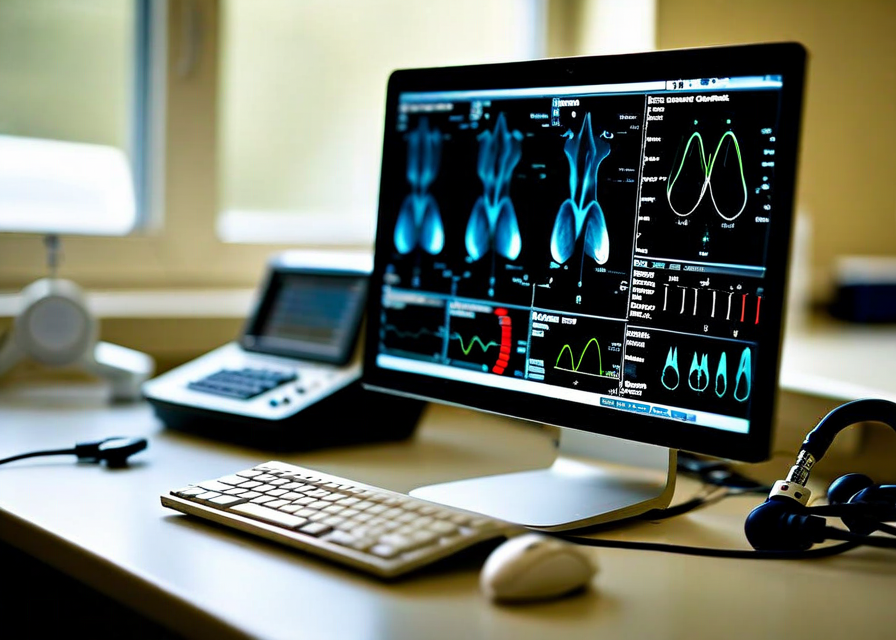
Our Solutions

Three AI modules, each built for a specific nuclear medicine imaging challenge.

Solution 01

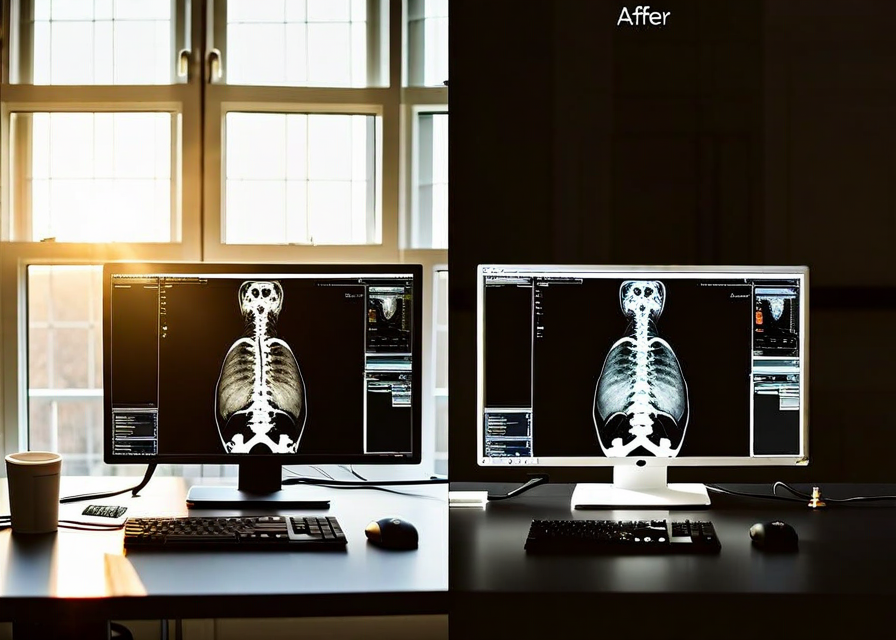
PET/SPECT Image Enhancement AI

Standard nuclear medicine acquisitions use the minimum dose and acquisition time needed for diagnosis. That means noise - the gamma camera collects fewer photons than a CT scanner collects X-rays by several orders of magnitude. The result is granular, noisy images where small lesions can be obscured by statistical noise.

NucliVision's enhancement model is a convolutional neural network trained specifically on paired low-count and high-count nuclear medicine acquisitions. It learns what real signal looks like versus noise for each tracer type: FDG, DOTATATE, PSMA, sestamibi, and bone scan.

The output is enhanced images delivered as DICOM secondary captures back to the existing PACS. Physicians see both the original and the enhanced scan. No workflow change, no new viewer required.

Technical specifications

  • Supported tracers: FDG, DOTATATE, PSMA, sestamibi, MDP bone scan, DaTscan
  • Processing time: under 90 seconds per acquisition on site GPU hardware
  • Output: DICOM SC with enhanced images + DICOM SR with quantitative comparison
  • Reconstruction compatibility: OSEM, MLEM, TOF-OSEM
  • Scanner compatibility: Siemens Biograph, GE Discovery, Philips Vereos, uEXPLORER
PET/SPECT Image Enhancement
Solution 02

Automated Dosimetry Calculation

Personalized radiopharmaceutical therapy requires dosimetry. The physics is well established - measure organ uptake at multiple time points, fit a kinetics curve, integrate under the curve to get absorbed dose. The clinical bottleneck is that this calculation, done manually, takes 60-90 minutes per patient and requires specialized medical physics support.

NucliVision automates the complete dosimetry workflow: organ segmentation from the SPECT/CT, S-value calculation using patient-specific anatomical data, time-activity curve fitting, and dose report generation in PDF format suitable for inclusion in the treatment planning note.

The system supports pre-treatment dosimetry for dose prescription and post-treatment dosimetry for outcome correlation. Both calculation modes follow EANM dosimetry committee guidelines.

Supported therapies

  • Lutetium-177 DOTATATE (neuroendocrine tumors)
  • Lutetium-177 PSMA (metastatic castration-resistant prostate cancer)
  • Yttrium-90 radioembolization (hepatocellular carcinoma)
  • Iodine-131 (differentiated thyroid cancer)
  • Actinium-225 PSMA (research and expanded access)
Dosimetry Calculation
Solution 03

Diagnostic Report Generation

A nuclear medicine report requires quantitative data: SUVmax, SUVmean, lesion volume, lesion-to-background ratio, PERCIST/RECIST response criteria, Deauville score for lymphoma. Extracting these numbers manually from a viewer and typing them into a report takes 15-25 minutes per scan. Across a 20-scan day, that is 5 hours of transcription work.

NucliVision extracts quantitative metrics automatically from the enhanced scan data and populates a structured report template. The physician opens a pre-populated report: findings section filled with measurements, comparison to prior study auto-generated, impression section templated with differential based on tracer and clinical indication.

The physician reviews, edits as needed, and signs. Total time from opening the viewer to dictating the impression typically drops from 25 minutes to 8 minutes per scan in our beta site data.

Report capabilities

  • Auto-extraction: SUVmax, SUVmean, MTV, TLG per lesion
  • Response criteria: PERCIST, RECIST 1.1, EORTC, Deauville, PSMA-RADS
  • Prior comparison: automatic side-by-side quantitative change summary
  • Output format: HL7 CDA document, PDF, plain text for dictation import
  • Integration: Epic, Cerner, Nuance PowerScribe via API or HL7 interface
Report Generation

Want to see these tools on your department's scans?

We run evaluations with live clinical data. Bring your own cases - PET, SPECT, or dosimetry series.

Request an Evaluation